Austin Ollar | Founder of The First Pattern™ Map

Scientific Research

My aim with TFP is to push scientific validity as far as possible and seed a research direction others can build on. I am not a specialist in every domain, so my focus is broad validation through creative, falsifiable experiments that test where TFP generalizes and where it breaks. Below are the current implementations and papers for TFP as a theory-driven generalist forecasting algorithm. If you are interested in extending, validating, or independently replicating this work, feel free to reach out!

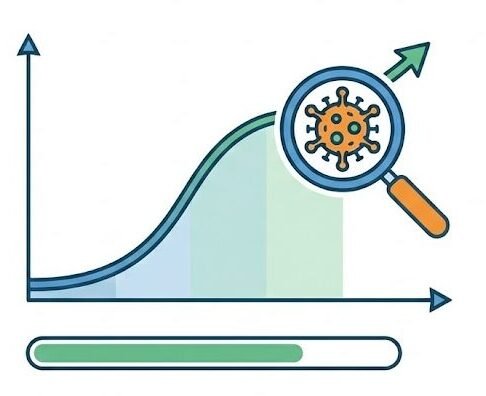
Flu Forecasting

This paper asks a simple question: can one general-purpose forecasting method predict influenza hospitalizations at the US state level, without being custom-built for flu. Using two recent flu seasons, TFP v2.2 outperformed two leading ensemble forecasting systems used in the CDC FluSight ecosystem at the most practical horizon, one week ahead, cutting error by about 37%. It remained competitive at longer horizons, which helps clarify both where the method is most useful and where its advantage fades.

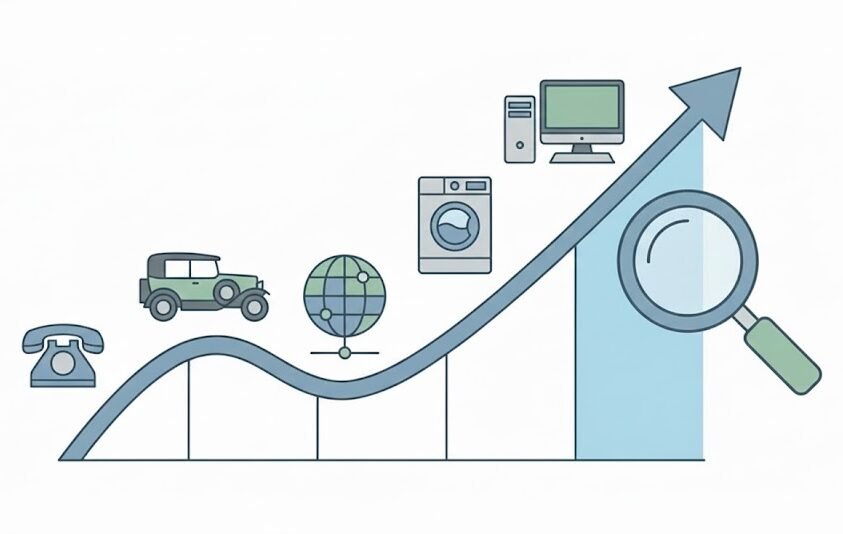
Tech Adoption Forecasting

Technology adoption often follows an S-curve, slow at first, then rapid growth, then saturation. Using data from 21 household technologies, TFP v2.2 made substantially more accurate predictions than the classic “Bass diffusion” approach, cutting error by about 34%, and it performed better on 76% of the technologies tested. It also stayed ahead even when we only compared cases where the Bass model fit successfully, which helps show the improvement is not a technical artifact.

Cross-Domain Intervals

This paper tests whether a simple, general-purpose method can produce useful prediction intervals across many different forecasting problems. It introduces Empirical Residual Scaling (ERS), a three-parameter rule for turning point forecasts into uncertainty bands, and compares it to split conformal prediction across 11 domains including epidemiology, technology adoption, energy, finance, and retail. Across 25,593 forecast instances, both methods achieve strong coverage, while conformal typically produces sharper intervals. The goal is to show a practical baseline that is easy to apply, and to clearly document when each approach works best and where it can fail.

Synthesis Paper

This paper presents TFP v2.2 as a general-purpose forecasting method, meaning it uses one fixed setup and is tested across many very different real-world datasets, not custom-built for each one. Across 11 domains, including flu and COVID forecasting, technology adoption, energy load, retail demand, web traffic, and finance, TFP reduced average error by 52% compared with a widely used baseline called SimpleTheta, with an 11 out of 11 win rate on that comparison. The significance is less about any single dataset, and more about showing that one consistent method can generalize broadly, and still stay competitive without needing domain-specific tuning.

Supplementary materials

Supporting files for the papers, including figures, tables, evaluation outputs, and reproducibility notes, are available in the public GitHub repository below. Code for the core TFP implementation is available on request.

GitHub: https://github.com/aollar/TFP-supplementary-materials


Scroll to Top